You’ve probably heard it from a relative, a WhatsApp forward or a wellness reel: “Don’t eat fruit after sunset!” It sounds convincing, but is there any truth to it? Mostly no. Fruits are packed with vitamins, minerals, fiber, and antioxidants, which is why they’re among the fruits you should eat daily for better health and healthy aging.
They don’t turn harmful when the sun goes down. That said, a few fruits can leave some people feeling bloated or dealing with acidity, especially when eaten in big portions right before bed. So instead of strict rules, let’s look at five fruits worth being mindful of in the evening, and how to enjoy them without any discomfort.
Is Eating Fruit After Sunset Actually Bad for You?
There’s no strong scientific evidence that fruit becomes unhealthy after dark. Your body keeps digesting food day and night, and the nutrition in fruit doesn’t vanish at sunset.
What does matter is how much you eat and how close to bedtime you eat it. A large bowl of fruit right before lying down can cause bloating or make acid reflux worse in some people. That’s about timing and portion size, not the fruit itself.
The best approach to healthy eating is simple: eat a variety of fruits, keep portions reasonable, and notice how your body reacts. Unless a particular fruit bothers you, or you’ve been given specific dietary advice, there’s no need to give up evening fruit.
5 Fruits to Limit or Be Mindful of After Sunset
All five are nutritious. Some people just find they feel better having them earlier in the day.
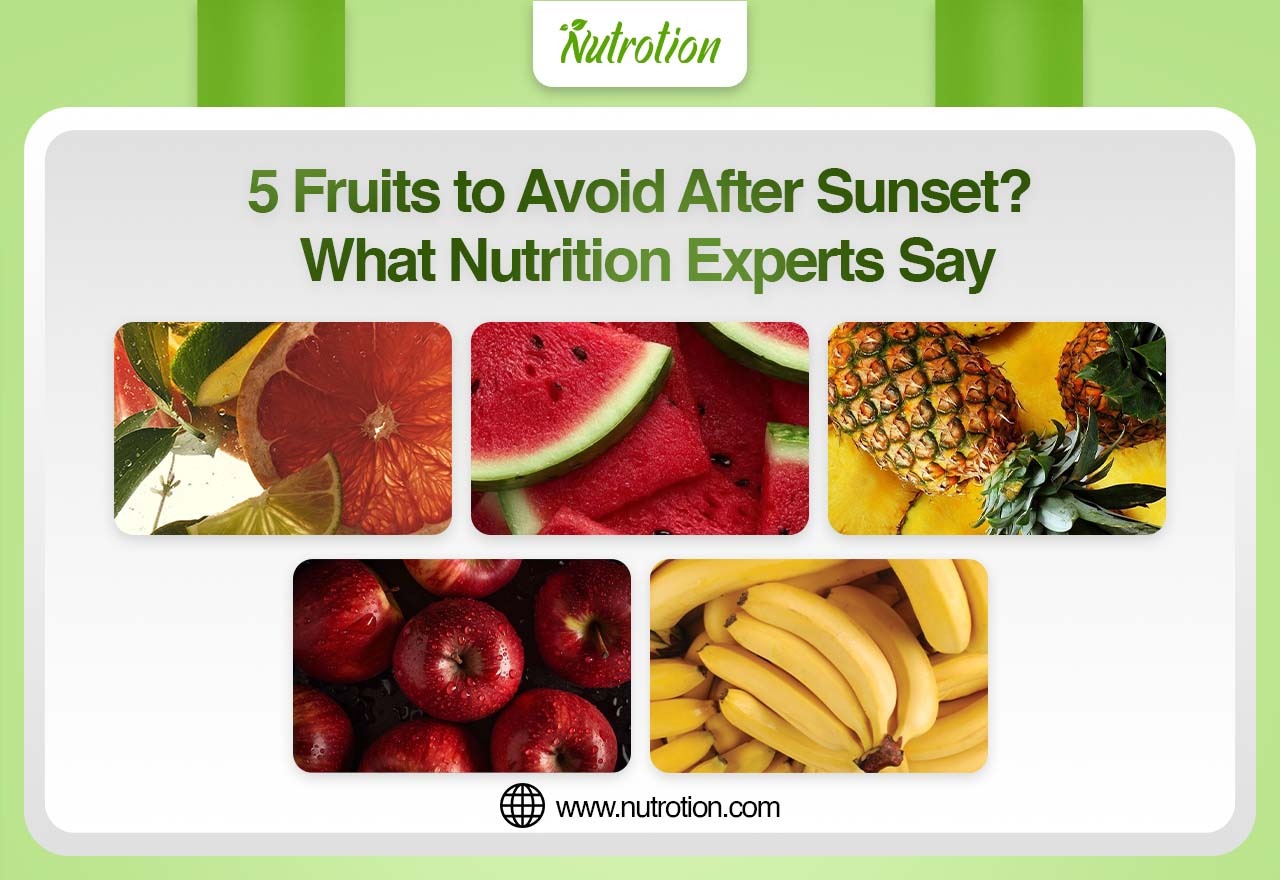
- Citrus Fruits
Oranges, lemons, and grapefruit are full of vitamin C and other helpful plant compounds. But they’re also acidic, so if you’re prone to heartburn or reflux, a citrusy snack right before bed may make symptoms more noticeable.
Healthy eating tip: If citrus gives you acidity at night, have it earlier in the day. If it doesn’t bother you, there’s no reason to skip it.
- Watermelon
Juicy, refreshing, and perfect for warm weather, watermelon is mostly water and gives you a bit of vitamin C too. The catch? A big slice (or three) close to bedtime might send you to the bathroom in the middle of the night. Some people also feel bloated after a large serving.
Healthy eating tip: Stick to a moderate portion in the evening, and go easy on other drinks right before bed if night-time bathroom trips disturb your sleep.
- Pineapple
Pineapple brings vitamin C, manganese and fibre, plus bromelain, a group of enzymes that help break down protein. It’s also acidic, which can bother people with heartburn or a sensitive stomach, particularly when they eat a lot of it late at night.
Healthy eating tip: If pineapple gives you acidity, try a smaller portion or enjoy it earlier. If it sits fine with you, there’s generally no need to avoid it after sunset.
- Apples
Apples are a go-to for healthy eating. They’re filling, convenient,t and rich in fibre, including pectin, which supports digestion. However, they also contain fermentable carbohydrates that can cause gas or bloating in some people, especially those with sensitive digestion or irritable bowel syndrome. A large apple right before bed may not feel great for them.
Healthy eating tip: Try a smaller portion and see how you feel. Having your apple a little earlier in the evening can also help.
- Bananas
Bananas give you carbohydrates, potassium, vitamin B6 and fibre, and they make a handy, satisfying snack. They often show up on “avoid at night” lists, but there’s no strong evidence that a banana after sunset harms most people. A big portion may just feel heavy for some. And if you’re managing your blood glucose, it’s worth fitting bananas into your overall meal plan.
Healthy eating tip: A small banana can be a perfectly reasonable evening snack. Go by your appetite and dietary needs, not the clock.
Which Fruits Can You Enjoy in the Evening?
You don’t need a strict “night-time fruit” list. Plenty of options work well:
- Kiwi: vitamin C, fibre and other useful nutrients
- Papaya: vitamin C, folate and fibre
- Berries: strawberries and blueberries offer fibre and antioxidants
- Pears: a good source of fibre, though they may cause bloating in people sensitive to certain fermentable carbohydrates
- Bananas: potassium and carbs, and filling when you want a proper snack
Pick what you like and what feels comfortable. If you’d like more ideas, this guide to vitamin-rich fruits is a good place to start, and if you’re eating with the seasons, here are some healthy fall foods and the best ways to eat them. If one fruit keeps causing trouble, try a smaller portion or eat it earlier.
What’s the Best Time to Eat Fruit?
You might have heard that fruit is only good in the morning. In reality, there’s no single best time that works for everyone.
Have it at breakfast, as a mid-day snack, after lunch, ch or in the evening. Your overall diet, your portion sizes, and how the food fits your routine matter far more than the time on the clock. The same goes if weight management is your goal. Our list of the best fruits for weight loss shows that what and how much you eat counts more than when.
If you often get acid reflux, it may help to stop eating about three hours before lying down. That applies to meals and snacks in general, not just fruit. And if you have diabetes, fruit can still be part of a healthy diet. The right portion and timing depend on your blood glucose patterns, medication, and overall meal plan.
Simple Healthy Eating Tips for Better Digestion and Sleep
A few small habits can make evenings more comfortable:
- Keep portions moderate. Big servings of any food close to bedtime can leave you feeling overly full.
- Go for whole fruit. It generally has more fibre than juice and keeps you satisfied longer.
- Don’t lie down right after eating. If you get reflux, leave some time before bed.
- Spot your triggers. Notice which fruits cause acidity or bloating, then adjust the portion or timing.
- Keep your diet balanced. Fruit, vegetables, whole grains, protein and healthy fats all belong in your day.
- Wash your fruit. Rinse it under clean running water before you cut or eat it.
Final Thoughts
Healthy eating doesn’t mean fearing nutritious food after sunset. Oranges, watermelon, pineapple, apples and bananas all offer real benefits, though some of them may bother certain people when eaten in large portions or close to bedtime.
So skip the strict rules. Listen to your body, keep portions sensible, and eat a good variety of fruit, whatever time of day it is. Not sure where to begin? Start with these 4 best fruits and build from there.
FAQs
- Is it bad to eat fruit after sunset?
No. Most fruits are safe to eat after sunset. The things that matter are your own digestive symptoms, your portion size, and how close to bedtime you eat. - Which fruits should you avoid before bed?
Citrus fruits and pineapple may trigger reflux in some people, and a large serving of watermelon may mean extra bathroom trips at night. Apples and bananas are generally fine but can cause discomfort for certain individuals. - Can eating bananas at night affect sleep?
There’s no strong evidence that bananas generally disrupt sleep. A moderate serving can be a good evening snack for many people. - Is watermelon good to eat in the evening?
Yes, it can be part of a balanced diet. If its high water content wakes you up at night, try a smaller serving. - What is the best time to eat fruit?
There’s no one best time for everyone. Eating a variety of fruits regularly, in portions that suit you, matters more than a strict schedule.