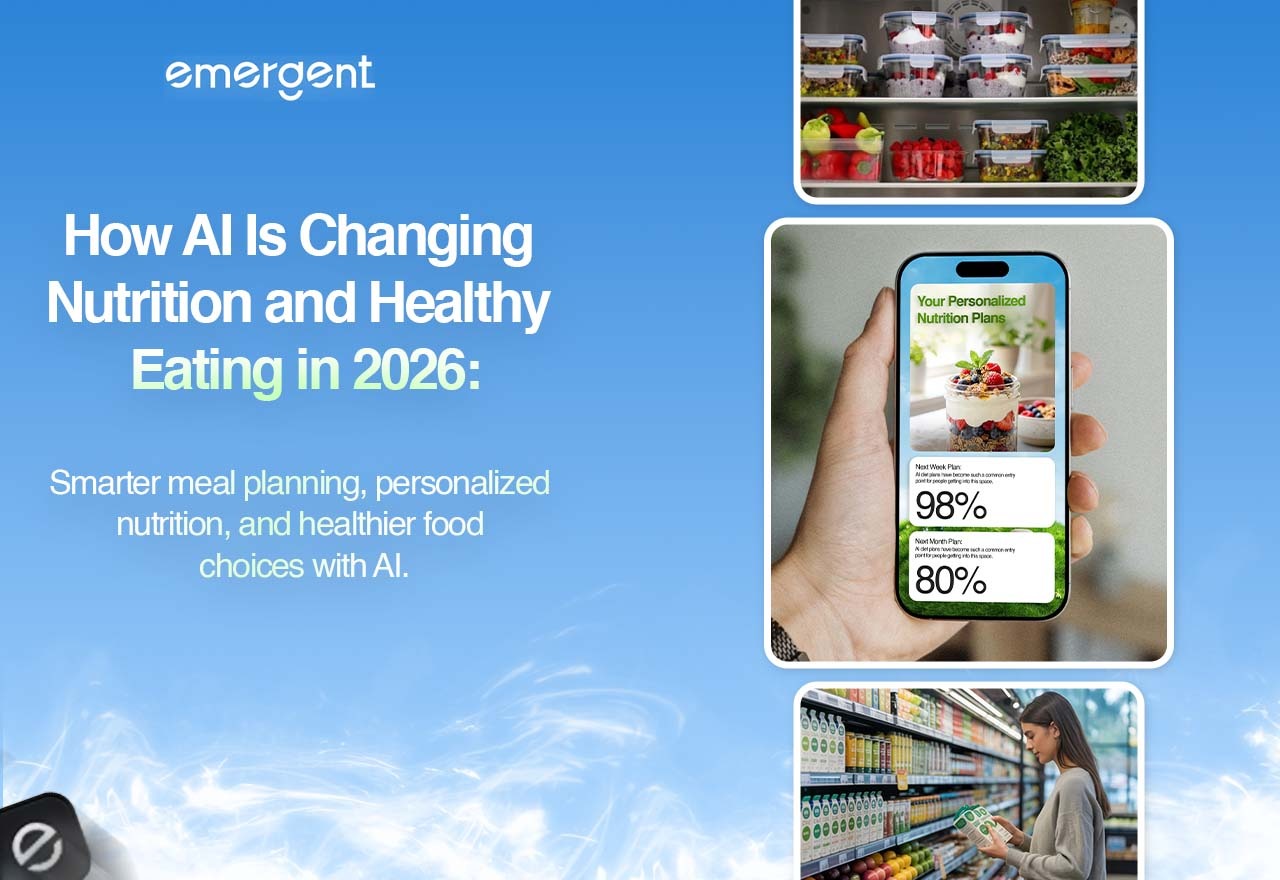
Let’s be honest — figuring out what to eat has never been simple, and most of us are still winging it half the time. That’s exactly where AI in nutrition has quietly stepped in over the last couple of years. Apps can now look at what you eat, learn your habits, and actually suggest something better without you having to become a nutrition expert yourself.
We’re talking meal plans built around your actual life, food logging that takes seconds instead of guesswork, and grocery lists that make sense for once. Tools like Emergent are part of why this shift feels so approachable now; they’re making AI-powered solutions something regular people can actually use, not just something tech companies talk about. In this article, we’ll take you through the ways that AI in nutrition is revolutionizing healthy eating in 2026, from meal planning to grocery shopping to decoding tricky food labels.
What Is AI in Nutrition?
AI in nutrition simply means using artificial intelligence to understand what you eat and help you eat a bit better. It looks at your food preferences, your eating patterns, and nutritional data, then turns all of that into suggestions that actually fit your life instead of some generic diet plan.
This is really what nutrition technology has been building toward for years — making personalized advice something anyone can access, not just people who can afford a dietitian. And platforms such as Emergent are helping push AI-powered nutrition tools further into everyday reach.
- Personalized Nutrition Plans
One of the biggest wins here is genuinely personalized nutrition — plans built around your preferences, lifestyle, budget, and fitness goals, not a one-size-fits-all template. That’s a real step up from generic meal plans that assume everyone eats the same way and wants the same results. It’s also why AI diet plans have become such a common entry point for people getting into this space.
- Smarter Meal Planning With AI
Need a week’s worth of meals sorted in minutes? That’s basically what AI does best right now. It can build out a full plan, suggest recipes based on what’s already sitting in your fridge, and adjust for your budget or how much time you actually have to cook. Building something like this from scratch is exactly the kind of practical digital solution platforms like Emergent are designed to help people create.
- Tracking Calories and Nutrients
Food logging used to be tedious. Now, AI-powered apps can track calories, protein, carbs, fats, fiber, vitamins, and minerals — sometimes just from a photo of your plate, thanks to image recognition. Worth noting, though: these estimates aren’t always perfectly exact, so treat them as a helpful guide rather than gospel.
- AI-Powered Food Recommendations
This is where AI nutrition tools really shine — nudging you toward better choices without taking away your say in the matter. Think lower-sugar swaps, higher-protein alternatives, more fiber, less sodium. It’s less about rules and more about making the healthier option easier to spot.
- AI for Grocery Shopping
AI can also build personalized grocery lists, compare ingredients, and point out healthier alternatives while you shop. As a bonus, smarter shopping tends to mean less food waste too, since you’re buying with more intention.
- Understanding Food Labels With AI
Nutrition labels can be genuinely confusing, and AI is proving useful here too — breaking down added sugar, sodium, calories, protein, and ingredient lists into something you can actually understand at a glance.
- AI and Healthy Eating Habits
Beyond meal planning, AI can help you stick with healthy eating habits over time through reminders, progress tracking, and ongoing personalized suggestions. Tools like Emergent show how accessible this kind of support has become. That said, consistency still comes down to you — the tool can only nudge, not do the eating for you.
Benefits of AI in Nutrition
Once it clicks, the appeal is pretty obvious. Here’s what people actually get out of it:
- Saves real time on meal planning — no more staring at the fridge wondering what to cook
- Makes nutrition information easier to digest (pun intended)
- Delivers recommendations that actually feel personalized, not generic
- Keeps grocery shopping organized instead of a last-minute scramble
- Supports healthier habits day to day, without it feeling like a chore
- Makes nutrition technology genuinely convenient, not just a gimmick
Limitations of AI Nutrition Tools
That said, it’s worth staying realistic about what this tech can and can’t do. A few things to keep in mind:
- Recommendations can sometimes be off, or just a bit too generic to be useful
- Calorie and nutrient estimates aren’t always spot-on
- AI still can’t fully grasp your individual health situation the way an actual professional can
- It shouldn’t be your go-to for medical nutrition decisions
- When it really matters, a qualified healthcare or nutrition professional is who you want in your corner
The Future of AI and Healthy Eating
AI in nutrition will only become more individualized in the future. Imagine more intelligent food tracking combined with wearable technology, as well as meal planning that automatically integrates with your fitness and lifestyle data. Platforms like Emergent show where this is all going: AI-powered tools will no longer be a novelty but rather a common, accessible part of everyday life.
How to Use AI for Healthier Eating in 2026
A few pointers to get started:
- Start small with a simple meal-planning tool
- Use AI to explore new recipes and healthier alternatives
- Double-check nutritional info before making decisions
- Pair AI suggestions with reliable nutrition sources
- Avoid following a restrictive AI-generated diet without professional guidance first
Final thoughts
From meal planning to grocery shopping to finally making sense of food labels, AI in nutrition is reshaping how we approach healthy eating in 2026. Used right, it’s a genuinely helpful tool — just not a replacement for professional advice. Platforms like Emergent are a good example of how accessible this technology has become, and honestly, that’s a pretty exciting place for everyday nutrition to be heading.