If you sit at a desk most of the day, you’ve probably heard of dead butt syndrome — or felt it without knowing the name. It’s what happens when prolonged sitting leaves your glutes underused and slow to activate. Doctors sometimes call it gluteal amnesia, and it’s more common than most people realize. This guide covers what it is, its symptoms and causes, and the exercises that help.
What Is Dead Butt Syndrome?
This describes glute muscles that have essentially “forgotten” how to fire properly, usually from too much sitting. A major contributor to hip stability is the gluteus medius, and if it’s inactive for extended periods, other muscles will begin to compensate. The muscles are not dead; they are just underused, and inactivity affects how well the brain and muscles communicate when moving.
Common Dead Butt Syndrome Symptoms
Symptoms of dead butt syndrome typically appear gradually rather than all at once:
- Tingling or numbness in the buttocks
- Lower back or hip pain
- Weakness: getting out of a chair or climbing stairs
- Having trouble using your glutes when exercising
- Tight hamstrings and hips
- Subtle adjustments to your gait or posture
What Causes This?
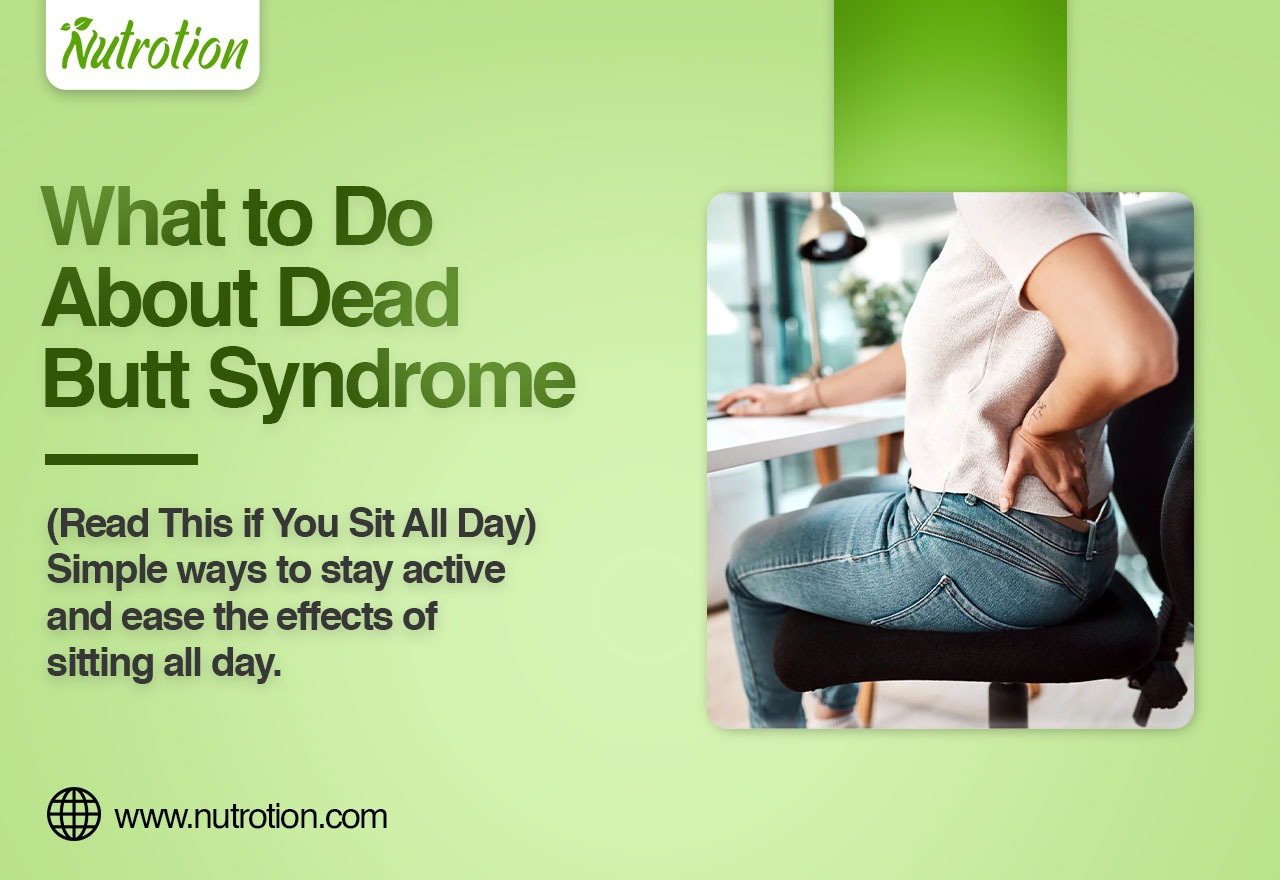
The biggest driver is simple: sitting for long periods, especially with a sedentary lifestyle layered on top. A lack of lower-body exercise, poor form during workouts, muscle imbalances between the glutes and hip flexors, and repetitive movement patterns all play a role too. Prolonged sitting and glute weakness tend to go hand in hand, and researchers increasingly point to prolonged sitting and glute weakness as a pattern showing up across desk jobs and long commutes alike.
How to Fix Dead Butt Syndrome
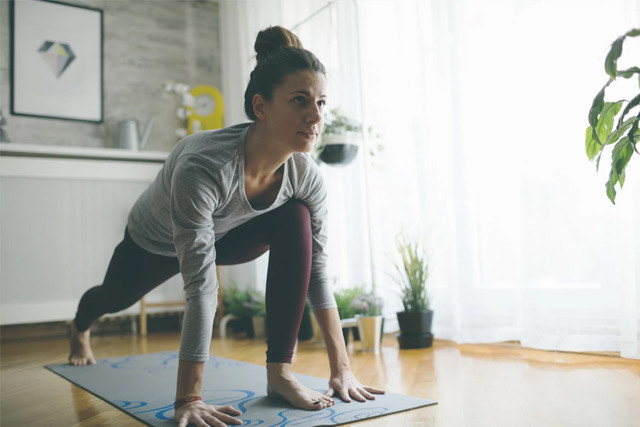
Wondering how to fix dead butt syndrome? Start small: Break up long sitting periods, add in regular walking, and focus specifically on glute activation pre-workouts. Strengthening the hips and legs, improving posture, and gradually increasing exercise all help to reverse the pattern. Nothing is secret, but consistency works.
Best Dead Butt Syndrome Exercises
A few reliable dead butt syndrome exercises to build into your routine:
- Glute Bridges — Lie on your back, feet flat, and lift your hips until your body forms a straight line. Beginners can start with fewer reps and focus on squeezing at the top.
- Clamshells — Lying on your side with knees bent, lift your top knee while keeping your feet together. Great for targeting the hip and glute together.
- Bodyweight Squats — Keep your chest up and knees tracking over your toes. Avoid letting your knees cave inward, a common mistake.
- Hip Thrusts — A natural progression from bridges, using a bench for a bigger range of motion and more glute engagement.
- Donkey Kicks — On hands and knees, kick one leg back and up without arching your lower back.
- Side-Lying Leg Raises — Lift your top leg straight up while lying on your side, working the hip muscles through a controlled range.
How Much Should You Exercise?
Pick a routine you can stick to – two or three short workouts a week is better than one all-out session. Quality, not quantity. Build in rest and recovery, and increase resistance slowly as you get stronger. Glute activation exercises work best when they become a regular habit and not an occasional fix.
How to Keep It From Coming Back
Prevention is breaking up sitting time: take movement breaks at work, don’t sit for hours at a time, and walk regularly. Make sure you include some strength training in your week, stretch out those tight muscles, and be aware of your posture throughout the day.
When Should You See a Doctor?
See a doctor if you notice persistent pain or numbness, significant weakness, symptoms extending down the leg, or difficulty walking or keeping your balance. The same goes for symptoms that don’t improve with movement and exercise. Similar symptoms can have other causes, so don’t automatically assume it’s this without checking.
FAQ
- Can too much sitting cause this?
Yes — prolonged sitting is the most common cause of weak glutes and reduced activation.
- How long does it take to improve?
It varies, but consistent glute activation exercises often show improvement within a few weeks.
- What is the best exercise for weak glutes?
Glute bridges and clamshells are popular starting points.
- Can walking help?
Yes, regular walking supports circulation and gentle glute engagement.
- Is this a medical diagnosis?
Not formally — it’s a common term for glute underactivity rather than an official diagnosis.
Final words
Dead butt syndrome is really just a byproduct of too much sitting and too little glute activation — some call it gluteal amnesia, and the name fits. The fix isn’t complicated — move more, strengthen the hips and glutes, and break up long sitting stretches whenever you can. If symptoms are persistent or unusual, it’s always worth checking with a doctor rather than guessing.